
Science Event
Calling all Sugar Creek Scientists!
The Sugar Creek PTO Science Event is part of the Imagination Fair and invites students to explore curiosity through science. All Sugar Creek students are welcome to participate by creating their own individual and unique science project, starting with a question or hypothesis and using the scientific method to investigate and share their results. Students will have the opportunity to display their work at the event.

Types of Science Projects
-
Hypothesis-Driven Project
This type of project asks a question about something that interests you based on what you see and learn through research. When scientists do this type of project, they develop a hypothesis, which is a guess based on what they think will happen. Next, scientists gather materials, perform experiments, and write down their results. Scientists use their results, which are also called data, to test and judge their hypothesis. Finally, scientists decide whether their guess or hypothesis was right or wrong. They base their opinion on what their observations tell them. All of these steps are known as the Scientific Method. To learn more about the Scientific Method, check out this fun YouTube video; The Scientific Method Rap.
-
Descriptive Project
This type of project describes and explains an interesting natural event, for example, the relationship between electricity and magnets, how an airplane flies, how the blood system works, or how a fossil was discovered and how its age and species were determined. A descriptive project should be more than a display of a collection or model; it needs to answer the question of how something works, how something was discovered, or why something happens.
Step by Step
1. Register
Complete the Science Event registration form and submit it online or return it to a classroom teacher by Friday, January 31st.
2. Plan with an Adult / Planifica con un Adulto
Choose an adult (parent, caregiver, or teacher) to help plan and safely complete the project.
3. Choose & Create
Select a science topic that interests you and complete your project safely with adult support as needed.
4. Display Your Work
Neatly present your findings or information on a tri-fold display board (available for pickup at Sugar Creek).
5. Set Up & Celebrate
Bring your display board and materials to school for set-up, invite family and friends, and enjoy the Science Event. After the event, please take your project home.
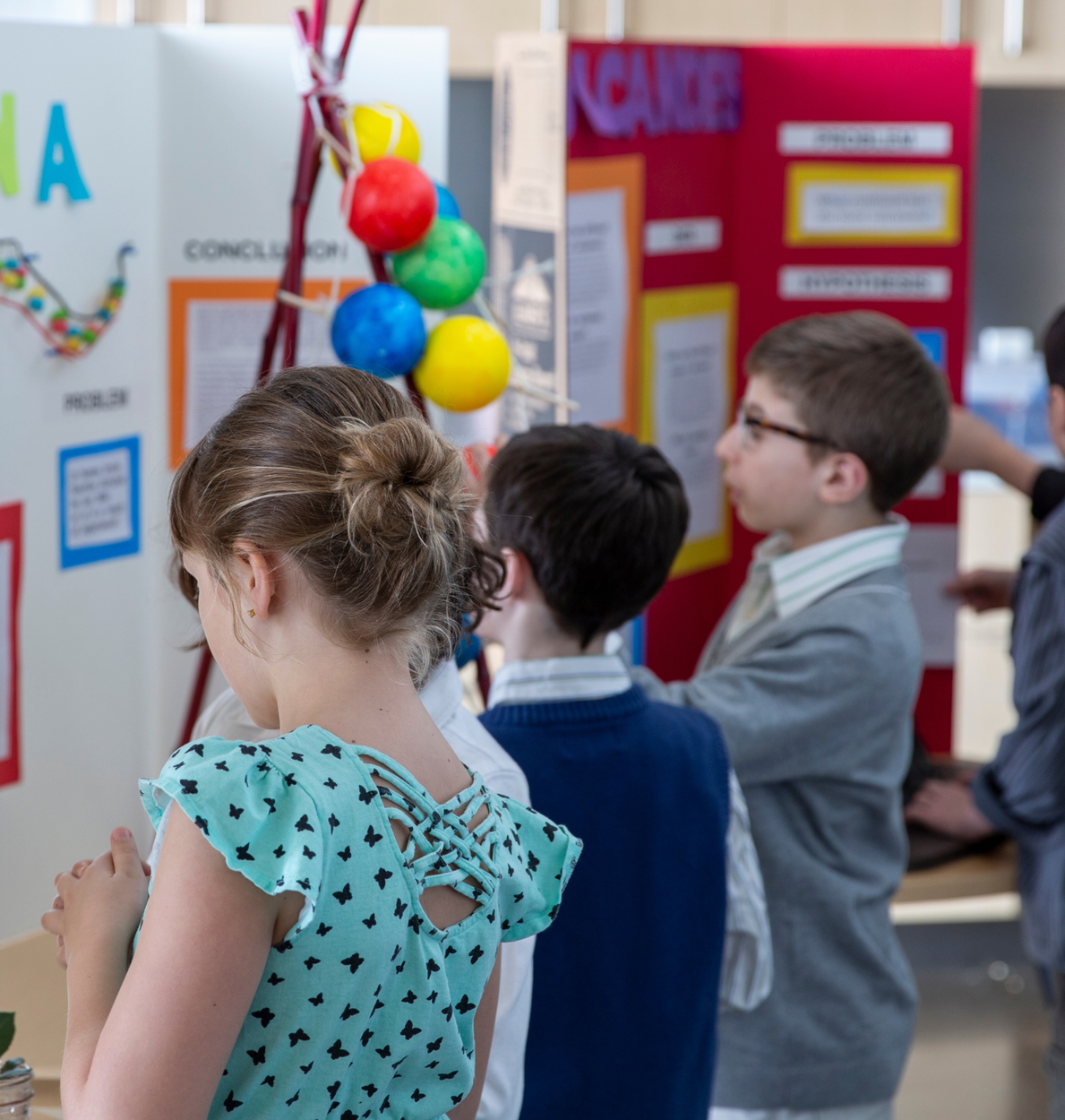
Display Boards
Sharing what you learned....
After you conduct your research and determine what you learned, you'll need to share your results on a tri-fold display board. A display board for will be provided to you through the generous support of Sugar Creek PTO.
Tables, charts, diagrams and illustrations are usually a good way to keep track and show your data to others. Ask your adult helper to help you decide upon the best way to do this. You may want to use photos, pie charts, bar or line graphs, or written information. Different kinds of information may need to be shown in different ways. Remember to clearly label things and be neat and accurate! Also make sure the title of your project, the names of all the kids working on it and their grades are prominently and legibly displayed, too.
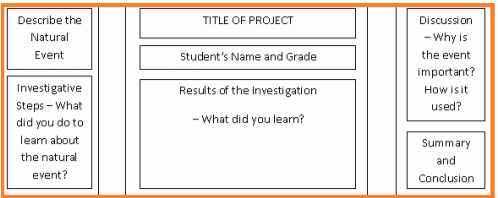
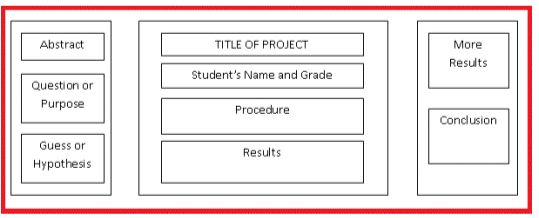
Below is a sample outline and an example of a display board for a Hypothesis-Driven and Descriptive project. A display board for your project does not have to be organized exactly like this - remember, this is just an example.
Project Ideas
Some of the very best science fair projects are based on things kids love! For example, if you love to play basketball, you could design a project about the physics of making a basket. Another example might be, if you and a friend enjoy cooking, the two of you may want to consider doing a project that looks at the chemical reaction in baked goods caused by baking soda or powder.
-
Students create an individual science project by choosing a question or hypothesis and using the scientific method to explore and share what they learned. Projects are displayed on a tri-fold display board.
-
Adults may help with planning, safety, and organization, but the project should reflect the student’s own work and ideas.
-
No. Students will display their projects, and there is no formal presentation required.
-
-
Check out these YouTube videos: